Enterprise application development combining business rules, forms, data changes and integrations. Includes impact analysis, engineering checks and deployment review.
Selected use cases, source information and operational outputs.
Understand the existing system
A new field or process step may affect other modules.
Software & processesScenario / 01
Interface conceptSchematic example
Change impact
Business rule
Form and processDefined dependency
Data modelDefined dependency
System dependencyDefined dependency
Processing and control structure
Decision boundary
Scope, design and deployment approval
Business request and the existing application
OutputTested application change
Knowledge and generation tools together
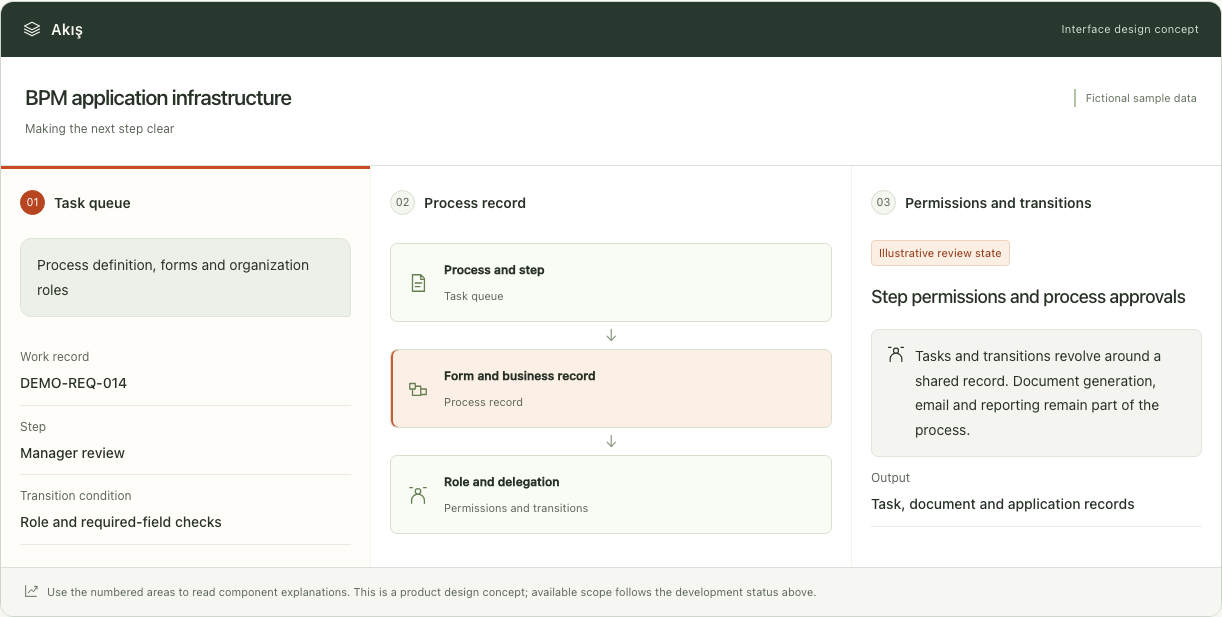
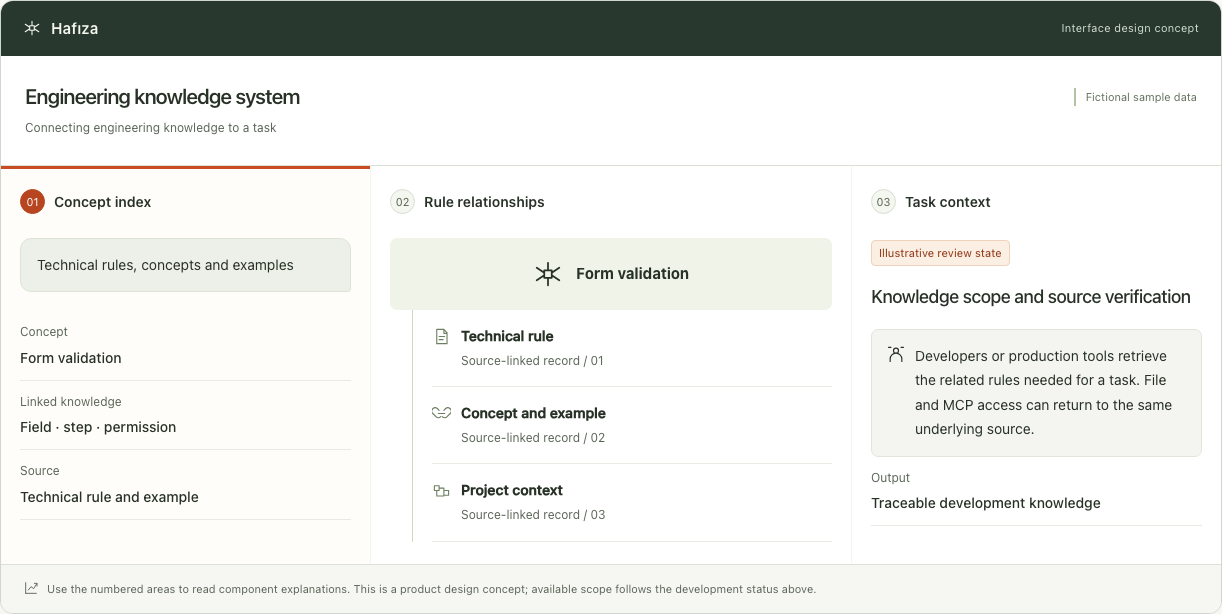
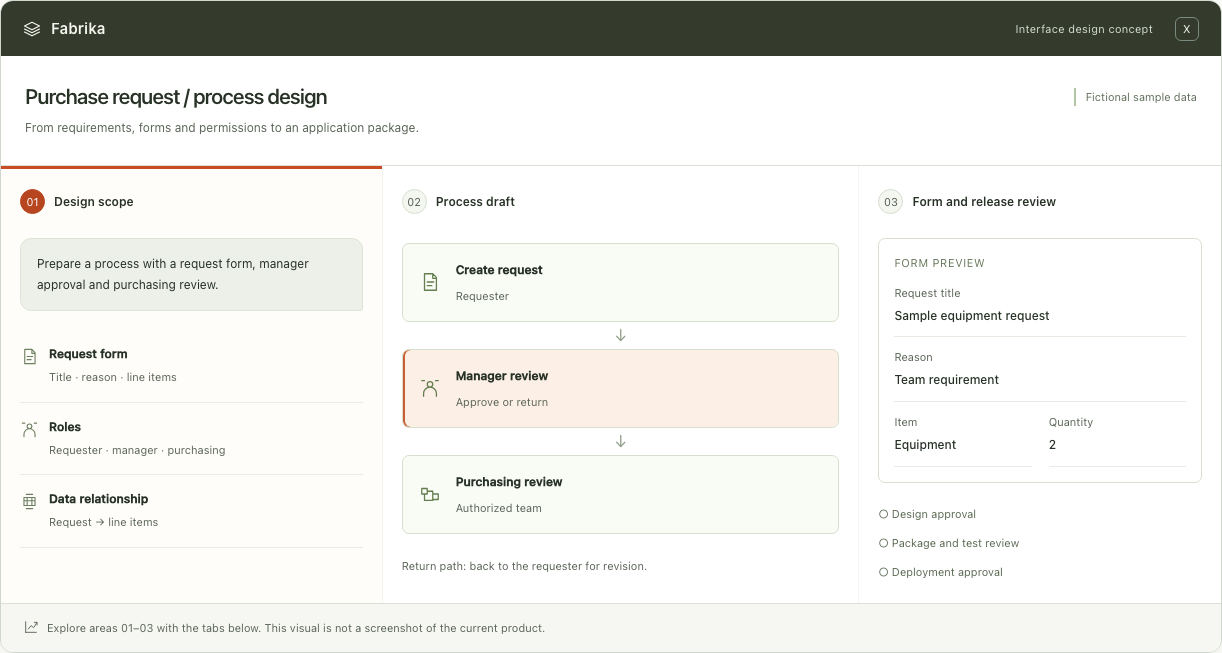
Fabrika supports process generation, Hafıza supplies development rules, and the BPM core supports application behavior.
Software & processesScenario / 02
Interface conceptSchematic example
Engineering tools
Structure definitionBPM
1inputTechnical knowledge
2contextGeneration task
3reviewCode and record
4outputValidation result
Conceptual field mapping, not executable code.
Decision boundary
Scope, design and deployment approval
Business request and the existing application
OutputTested application change
A verified change
Code, data, permissions and integrations are checked together.
Software & processesScenario / 03
Interface conceptSchematic example
Validated delivery
Traceable record
1
Change packageSource and scope
2
Test evidenceProcessing context
3
Approval decisionReview point
4
Deployment recordNext operation
The original record and subsequent decision stay separate.
Decision boundary
Scope, design and deployment approval
Business request and the existing application
OutputTested application change
Application approach
Scope and operating approach.
The scope, operating approach and boundaries of this work.
01
Understand the existing system
+
A new field or process step may affect other modules. Dependencies, data rules and user roles are identified first.
02
Knowledge and generation tools together
+
Fabrika supports process generation, Hafıza supplies development rules, and the BPM core supports application behavior. The solution is configured for the existing environment.
03
A verified change
+
Code, data, permissions and integrations are checked together. The deployment decision and execution record are part of delivery.
In everyday work
A coherent change, not just another screen
A small field or workflow change can affect other modules. Our software and process approach considers requests alongside data, roles and integration dependencies.
Software & processes / Working modelIllustrative use · no real customer data
Process generation, engineering knowledge and the BPM core work together. Design, generated changes and tests are evaluated as separate stages.
OutputTested application change
Change request
Understand the existing system
This component shows incoming information together with its identity and provenance. The request is described through its impact on the existing application. Affected records, rules and users are identified before implementation.
Impact analysis
Knowledge and generation tools together
This component explains how records are reviewed rather than displaying a result in isolation. Process generation, engineering knowledge and the BPM core work together. Design, generated changes and tests are evaluated as separate stages.
Testing and delivery
A verified change
This component distinguishes the user’s decision from the next work record. Code, data, permissions and integration checks form part of delivery. Deployment decisions and actions are recorded to preserve context for later maintenance.
The whole operation
Information, decisions and outcomes stay connected.
These distinctions show the information the application receives, where it needs the user and what it leaves for the next operation.
Starting information
Business request and the existing application
Human decision
Scope, design and deployment approval
Resulting structure
Tested application change
How do we assess its impact?
These are evaluation dimensions, not measured performance results. Comparisons use the same task types, data scope and human-review conditions.

 Interface conceptProduct development